Showing posts with label Salmon. Show all posts

Friday, August 30, 2013

Tortilla Crusted Salmon with Mango and Walnut Rice

a recipe great for the summer time

Salmon is one of my favorite fishes to prepare. It's fatty and flakey and has a very versatile flavor that goes with just about anything. You can 
cook it rare or well done and the fish remains moist and sweet, unlike yellowfin or bluefin tuna, which if served well done, you might as well be eating Charlie's in a can.

This is a dish best served on a hot summer day. It is light and refreshing and, most importantly, it is delicious.

ingredients

Note: It is important to realize that these recipes are merely guidelines to follow. They'll taste great as they are, but I encourage you to play with them and make the recipes your own.

Note: It is good practice to read the entire recipe, while paying particular attention to the "Notes", before you try to make the dish, as there are often subtleties that can be easily overlooked, which sometimes, can make all the difference in the world for the outcome. 

Makes 2 servings.

Skill Level: Beginner


Prep time about 20 minutes, plus one hour rest time between steps.

Cook Time about 30 minutes.

Ingredients:

  • 2 Filets of Salmon, fresh is always best, but frozen will do
  • 2 Mangos
  • Raspberries for the garnish, or some red food coloring
  • 1 radish, for garnish
  • 2 limes, for juice - 1 ½ tablespoons (you can use concentrate if you already have it on hand, if not, buy fresh limes)
  • 3 cloves of garlic
  • Sugar
  • 1 Bag of tortilla chips (It would be better to buy corn tortillas and fry you own chips, but pre-made will work fine.)
  • ½ cup whole walnuts (You can use cashews, pistachios, macadamias, pecans, or any other nuts you may already have on hand)
  • 1 Bag of frozen sugar snaps (Fresh would be better)
  • 1 tsp extra virgin olive oil
  • Black pepper, preferably fresh cracked.
  • Kosher salt

Tools Needed:
  • Medium Sautoir Pan
  • 1 Medium sauce pot
  • Measuring cups
  • Chefs knife
  • Petty or paring Knife
  • Fine mesh strainer (May not me necessary)
  • Food Processor
  • Large cutting board
  • Piping bag or use the corner of a storage/freezer bag)
Preheat oven to 350 degrees.

Note: Items that are labeled "for garnish" are completely unnecessary for the flavor of the dish, so do not go out of your way to acquire these items.

Mango


Cut the mango, with your knife hugging the seed.
preparing mango
If done correctly, you should not have much meat left on the seed.


preparing mango


Use a paring knife to cross cut the mango half.

Dicing mango
Flip the mango inside out and use your thumb to separate the mango from the skin.


preparing mango


Put the mango in a food processor.

Puree mango


After blended smooth, adjust the sweetness with sugar, if necessary, and add the juice of one lime for a little tang.


puree


Your mango coulis should be smooth. Run through a fine mesh strainer if necessary.

Cips


Crush up corn tortillas.

Note: You want to use plain tortillas here. You do not want to use flavored tortilla as they will overpower the flavorful subtleties of the dish. 
Knife crushing garlic


Flatten garlic cloves with the palm of your hand and a chefs knife. Make sure the blade is facing away from you.

Diced garlic


Rough dice the garlic and set aside for now.

Toasting walnuts in olive oil with kosher salt


Salt and toast walnuts in olive oil until golden brown. Use either a sauteuse or a sauce pot to toast the nuts, over medium heat.

Tasted walnuts


Use a slotted spoon to remove the walnuts from the hot oil.

Toasting rice in olive oil


After the walnuts are removed, quickly add the cup of rice.


Constantly stir the rice as it toasts. This only takes a minute to two.


Note: It is good to have your water already measured out and within reach as the pot and oil are very hot and you don't want to stop stirring to get water because the rice will burn.


Note: If you sauté about ¼ of a cup of brunoise of mirepoix (carrots, celery, and onions diced ⅛"x⅛"x⅛"), prior to adding the rice, this is the recipe for rice pilaf. 
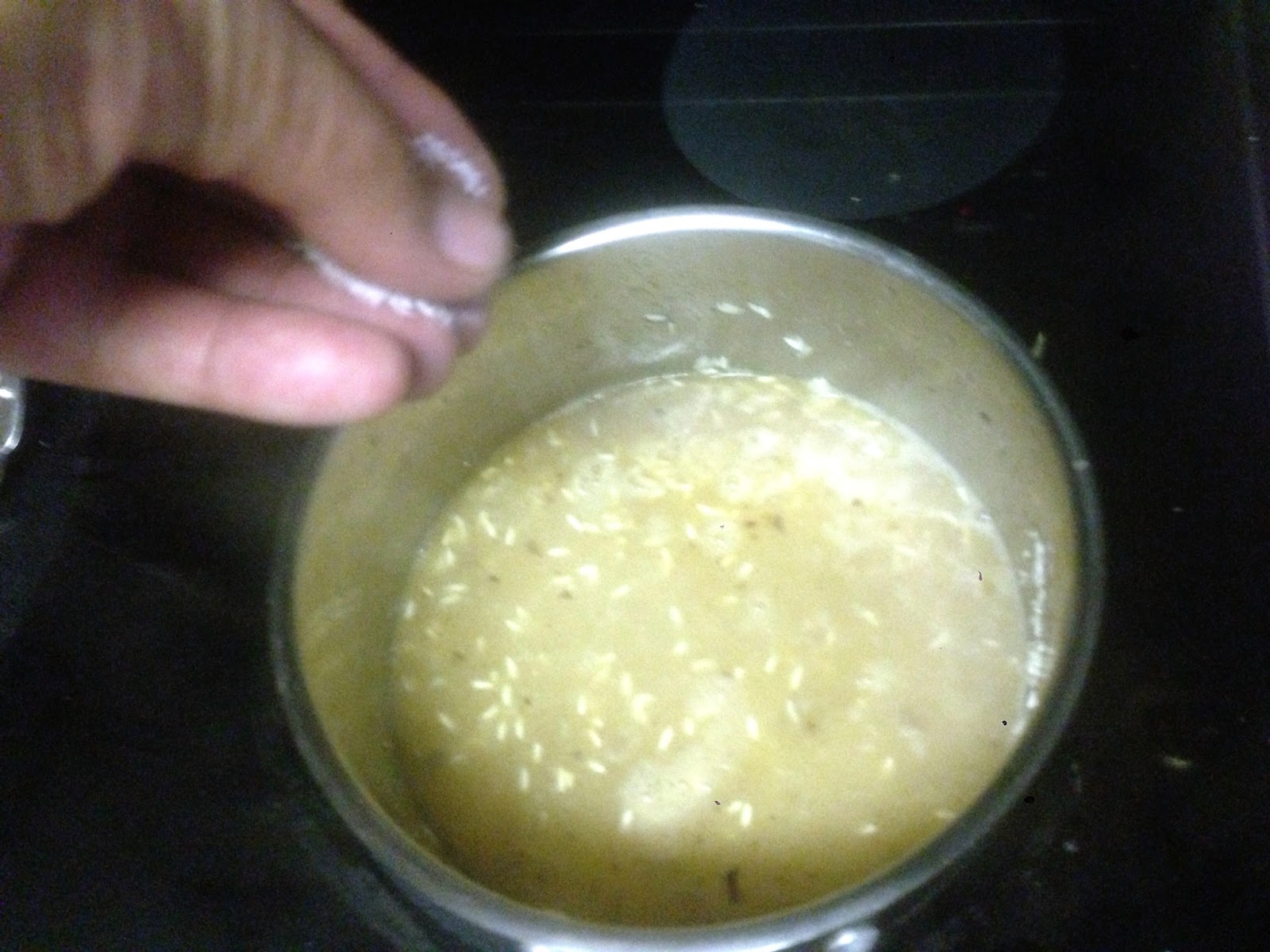
cooking rice with kosher salt


Salt the water. 

Note: You just want the water to have a smallest hint of saltiness. If you don't do this the rice will taste bland. If you salt the water as salty as you want the rice to taste, when it is done cooking, the rice will be overly salty to eat. AS the rice cooks, some of the water evaporates away, intensifying the 
flavor, which is why you want to under salt the water.
As soon as the rice comes to a full rolling boil, put a lid on the pot and place in the oven for 12 minutes.


As soon as the rice comes to a full rolling boil, put a lid on the pot and place in the oven for 12 minutes.

Just when the oil heats up, in a sautoir pan, for the beans, add the garlic and cook to 2-3 minutes before adding the beans.  Note: You want the heat low enough, when cooking the garlic, so that the garlic does not brown. Browning garlic makes it bitter.


Just when the oil heats up, in a sautoir pan, for the beans, add the garlic and cook to 2-3 minutes before adding the beans.


Note: You want the heat low enough, when cooking the garlic, so that the garlic does not brown. Browning garlic makes it bitter.

Sautée the garlic in olive oil, as the oil is waking up. Just before the garlic begins turning color, add the beans. Warm through and toss with a little salt and pepper to taste.


Sautée the garlic in olive oil, as the oil is waking up. Just before the garlic begins turning color, add the beans. Warm through and toss with a little salt and pepper to taste.

To sauté the salmon, get a pan with olive oil smoking how. You ideally went wisps of smoke, not billowing smoke, because at that stage, the oil is about to burst into flames hot.   Note: when the oil is ready, it will noticeably expand a bit, turn clear, and it will begin to ripple around the edges and you can see in the photo.
To sauté the salmon, get a pan with olive oil smoking how. You ideally went wisps of smoke, not billowing smoke, because at that stage, the oil is about to burst into flames hot. 

Note: when the oil is ready, it will noticeably expand a bit, turn clear, and it will begin to ripple around the edges and you can see in the photo.

Add one filet to the pan, skin side up, while constantly shaking the pan from side to side. This help the fish from sticking, incase you didn't get the pan hot enough. After about 15 seconds, the pan will have recouped enough heat to accept the second filet, again shaking until it is clear the salmon is not going to stick.  Note: if you are using teflon coated pans, the shaking is not necessary.
Add one filet to the pan, skin side up, while constantly shaking the pan from side to side. This help the fish from sticking, incase you didn't get the pan hot enough. After about 15 seconds, the pan will have recouped enough heat to accept the second filet, again shaking until it is clear the salmon is not going to stick.

Note: if you are using teflon coated pans, the shaking is not necessary.

Flip when golden brown.


Top with the tortilla chips and place in the oven for 4-6 minutes, depending on how thick the filets are and how well done you want your fish cooked.  Note: if you have fresh salmon, it is best cooked medium, still just a touch raw in the middle.


Top with the tortilla chips and place in the oven for 4-6 minutes, depending on how thick the filets are and how well done you want your fish cooked.

Note: if you have fresh salmon, it is best cooked medium, still just a touch raw in the middle.

Note: Adding a little olive oil to butter raises the butter burn temperature so you can cook hotter for longer.


Note: Adding a little olive oil to butter raises the butter burn temperature so you can cook hotter for longer.

Heat the walnuts up in a pan with butter and a little olive oil.


Heat the walnuts up in a pan with butter and a little olive oil.


Add the rice to the pan and toss well. Adjust seasoning if need be.  Note: Rice sautés better if you have refrigerated it prior to use.


Add the rice to the pan and toss well. Adjust seasoning if need be.


Note: Rice sautés better if you have refrigerated it prior to use. 


little pipping bag. You can us the corner of a freezer bag if you need to.  Note: In this case, I did not have raspberries, so I took a little of the mango coulis and added a little red food coloring.
For the garnish, if you have raspberries on hand, make a coulis just like the mango, and place in a little pipping bag. You can us the corner of a freezer bag if you need to.

Note: In this case, I did not have raspberries, so I took a little of the mango coulis and added a little red food coloring.


Plate like so. I added some fine julienne of radish as a final garnish.  To do the mango's garnish, spread the mango coulis on the plate, use the pipping bag to create spiral of raspberry or red mango coulis in the yellow mango coulis. Using the tip of a paring knife, drag it back and fourth through the coulis. Play with this and see how many cool patterns you can make.  Enjoy.
Note: a coulis is a thin fruit or vegetable purée, used as a sauce.
Plate like so. I added some fine julienne of radish as a final garnish.

To do the mango's garnish, spread the mango coulis on the plate, use the pipping bag to create spiral of raspberry or red mango coulis in the yellow mango coulis. Using the tip of a paring knife, drag it back and fourth through the coulis. Play with this and see how many cool patterns you can make.


Enjoy.


Tuesday, July 30, 2013

Pan Seared Salmon and Roasted Portobellas inside a Roasted Red Bell Pepper Open-Face Ravioli. Finished with a light Ancho Chili Cream & Fried Leeks.

This is one of my signature dishes form when I was a working chef. It is an Italian meets Southwestern dish with a flavor and texture combination that really works. It is a little labor intensive but the result, you'll find, is well worth the effort.


Note: It is important to realize that these recipes are merely guidelines to follow. They'll taste great as they are, but I encourage you to play with them and make the recipes your own.

Note: It is good practice to read the entire recipe, while paying particular attention to the "Notes", before you try to make the dish, as there are often subtleties that can be easily overlooked, which sometimes, can make all the difference in the world for the outcome. 

Serves 2

Skill Level: Intermediate

Prep time about 30 minutes.

Pasta rest time at least 1 hour.

Cook Time about 20 minutes.

Ingredients:

  • 1/3 Jar of roasted red bell peppers
  • 2 6-8 oz portions of salmon
  • Basil (dry of fresh)
  • 2 portobellos
  • 1 leek
  • Heavy cream
  • 2 eggs
  • 4 cups all purpose flour
  • 2 small ancho chilies
  • Kosher Salt
  • Pepper
  • Garlic powder
  • Extra virgin olive oil


Tools Needed:

  • Food Processor
  • Chefs knife
  • Sauté pan
  • Sauce pot
  • Pasta roller or rolling pin
Note: You will have pasta leftover, so you can try another recipe, such as http://goldenislescooks.blogspot.com/2014/01/sauteed-chicken-and-pearl-onions-tossed.html


Puree roasted red bell peppers and basil


Make a bowl of flour on a cutting board.


Add 2 eggs and begin beat them while pulling in a small amount of flour. You want enough flour mixed in, so that the eggs are thick when you add the pepper puree. This will help bind the entire mixture so that it has far less chance of spilling out and all over the cutting board.


Add red pepper puree. This essentially replaces the moisture that water would normally add.


Scrape in more and more flour into the egg/pepper mixture.


Towards the end, and the pasta mix is a thick paste, begin pulling liberal amounts of flour into the mix. 


Once the pasta has become tacky, but not wet, it is ready for kneading.

It is alway a good idea to dust the cutting board with flour during the kneading process.


Knead the dough for at least 3-5 minutes, dusting the cutting board with flour as needed.


Knead in one direction, fold and knead in the opposite direction.


When done, you should have a nice little dough ball.


Let the dough rest for at least one hour at room temp.


Cut tops and roots off of the leeks.


Julienne the leeks.


Soak the leeks in cold water. Any dirt will settle to the bottom of the bowl.


Remove the stem of he portobella.


Using a spoon, scrape the gills away and discard them.


Slice the portobella into 1 inch thick strips.


Pan Roast the portobellas until golden.


Place 2 ancho chilies in some water, or white wine if you have it, and bring to a simmer. 


Add some salt to the simmering ancho chilies.


In a bowl, add some AP flour, salt, pepper, and garlic powder.


Dredge the wet leeks in the flour mix.


After simmering for about 20 minutes, remove the ancho chilies and add a cup and a half of heavy whipping cream. Reduce my half and season to taste.


Fry the leeks until golden brown, place on napkin to drain and sprinkle some salt on them.


After the pasta dough has rested for over an hour it is ready to be rolled.


Cut the dough ball in half. We will use the other half of the pasta for another recipe tomorrow.


Run through the pasta maker several times, working from the thickest setting to the thinnest.


Between each pass through the pasta machine, you can dust the pasta sheet with a little flour to ensure it doesn't stick going through the pasta machine.


You'll end up with a long thin pasta sheet. Cut into lengths equal to the width of the pasta to create squares.


Boil the pasta sheets for about 5 minutes.

Note: Fresh pasta cooks faster than dry pasta.


Note: If you use frozen fish of any kind, there are 2 thawing methods:


  1. The "staging" method, which is the prefered way to thaw any type of meat, is to let the meat thaw in the refrigerator overnight. With this method, it is important to plan your meals ahead of time.
  2. The next method is not recommended, but we all do what we have to do, and since this way is faster and takes no pre-planning, it is the method most of us are going to use. So what method is it? Simply thaw under a stream of constantly running cold water. Do NOT turn water off before the meat is completely thawed. ONLY use this method on CRYOVACED meat. If the cryovac packaging is perforated, where water can seep in, the quality of the meat can be compromised. There are, however, exceptions to this rule as shrimp and calamari can be thawed in water directly, without damage.  
Note: Some frozen fish, like tuna, come with instructions to remove from the cryovac packaging and thaw in refrigerator overnight. Refer the the packaging. 


Once the fish has thawed, it is always a good idea, for any fish, to place the fish on towels, or a thick layer of napkins, and lightly press any water out of the meat. You want the meat fairly dry to the touch, as dry to the touch as its fresh counterpart would be.


Salt, pepper, and pan sear the salmon, in extra virgin olive oil, until golden brown.


Place on sheet of cooked pasta on a plate or large bowl. Assemble the salmon and portabellas and cover with ancho chili cream.
Cover with a second sheet of cooked pasta and a little more ancho chili cream, then top the fried leeks.


Enjoy.